10 Hygiea
Astronomy

10 Hygiea

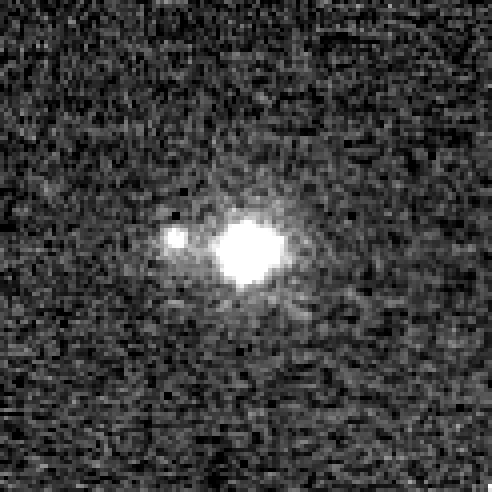
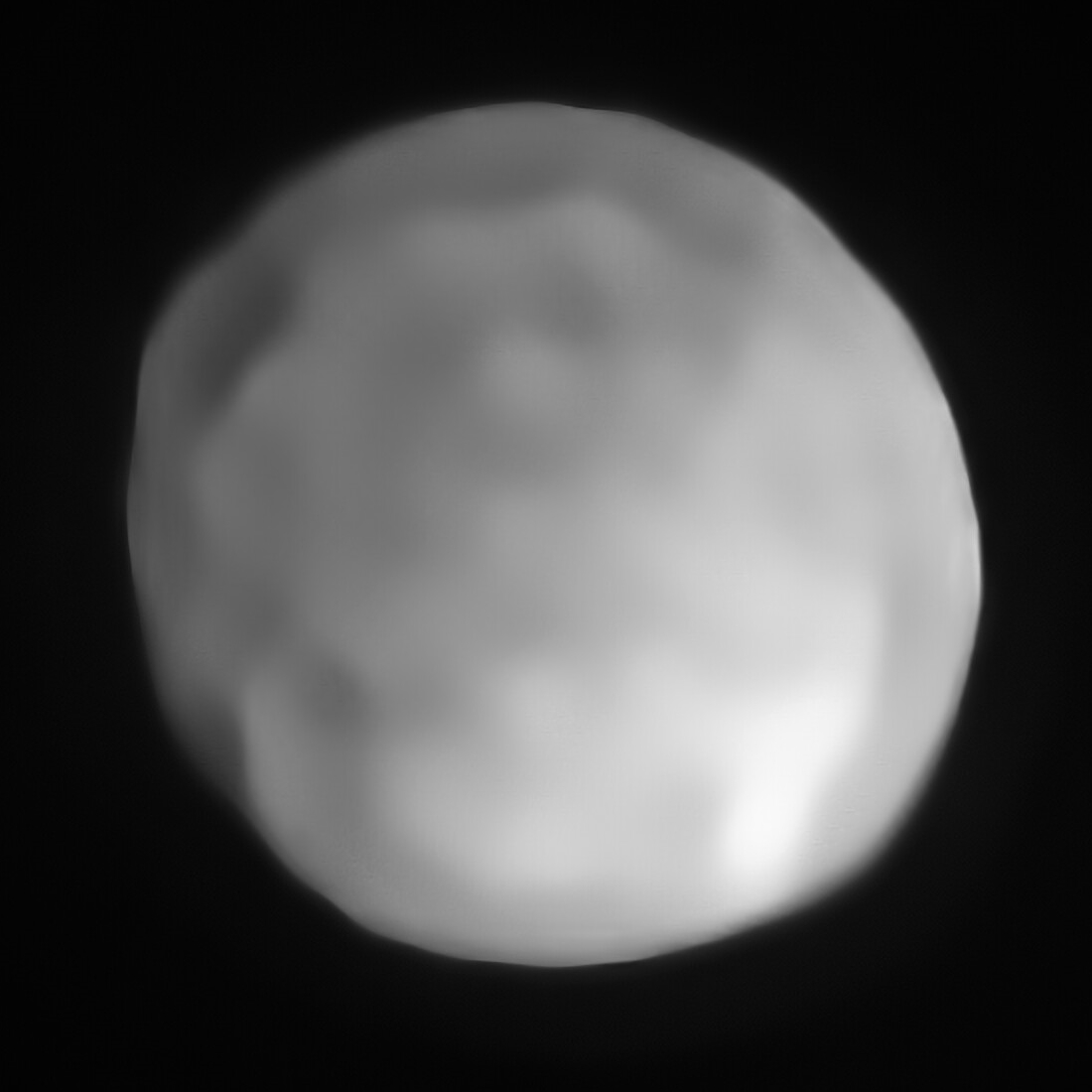
10 Hygiea is a large asteroid in the outer region of the main asteroid belt, between the orbits of Mars and Jupiter. It was the tenth known asteroid, discovered on 12 April 1849 by Italian astronomer Annibale de Gasparis at the Astronomical Observatory of Capodimonte in Naples, Italy. It was named

Chris Chris
· · 16 min read
Astronomy

2010s in science and technology

This article is a summary of the 2010s in science and technology. == Technology == Big data and "Big Tech" saw an expansion in size and power in the 2010s, particularly FAANG corporations. The growing influence of "Big Tech" over cyberspace drew scrutiny and increased oversight from national

Chris Chris
· · 9 min read
16 Psyche
Astronomy

16 Psyche

16 Psyche ( SY-kee) is a large M-type asteroid, which was discovered by the Italian astronomer Annibale de Gasparis, on 17 March 1852 and named after the Greek goddess Psyche. The prefix "16" signifies that it was the sixteenth minor planet in order of discovery. It is the largest and most massive

Chris Chris
· · 7 min read
Astronomy

1929 in science

The year 1929 in science and technology involved some significant events, listed below. == Astronomy and space exploration == July – Henry Norris Russell publishes his finding that hydrogen is the principal constituent of stars, acknowledging the previous demonstration of this by Cecilia Payne.

Chris Chris
· · 5 min read
120347 Salacia
Astronomy

120347 Salacia

120347 Salacia (provisional designation 2004 SB60) is a large trans-Neptunian object in the Kuiper belt. It was discovered on 22 September 2004 by American astronomers Henry G. Roe, Michael E. Brown, and Kristina Barkume using the Hale Reflector at the Palomar Observatory. Its discovery was

Chris Chris
· · 13 min read
Astronomy

(303775) 2005 QU182

(303775) 2005 QU182 is a large trans-Neptunian object in the scattered disk, estimated to be around 440 to 740 kilometres (270 to 460 miles) in diameter. It was discovered on 30 August 2005 by American astronomers Mike Brown, David Rabinowitz and Chad Trujillo at the Palomar Observatory in

Chris Chris
· · 1 min read
2026 in spaceflight
Astronomy

2026 in spaceflight

This article documents expected notable spaceflight events during the year 2026. == Overview == === Astronomy and astrophysics === On 11 January, NASA launched the Pandora small space telescope to study exoplanet atmospheres. The same Falcon 9 flight also carried two CubeSat-type space telescopes

Chris Chris
· · 7 min read
19521 Chaos
Astronomy

19521 Chaos

19521 Chaos (provisional designation 1998 WH24) is a cubewano, a Kuiper belt object not in resonance with any planet. Chaos was discovered in 1998 by the Deep Ecliptic Survey with Kitt Peak's 4 m telescope. Occultations suggest it is a compact or contact binary equivalent to a sphere 400 to 500 km

Chris Chris
· · 1 min read
15760 Albion
Astronomy

15760 Albion

15760 Albion (provisional designation 1992 QB1) was the first trans-Neptunian object to be discovered after Pluto and Charon. Measuring about 108–167 kilometres in diameter, it was discovered in 1992 by David C. Jewitt and Jane X. Luu at the Mauna Kea Observatory, Hawaii. After the discovery, they

Chris Chris
· · 3 min read
28978 Ixion
Astronomy

28978 Ixion

28978 Ixion (; provisional designation 2001 KX76) is a large trans-Neptunian object. It is located in the Kuiper belt, a region of icy objects orbiting beyond Neptune in the outer Solar System. Ixion is classified as a plutino, a dynamical class of objects in a 2:3 orbital resonance with Neptune.

Chris Chris
· · 10 min read